Best Productivity Tools for UK Professionals (2026 Guide)
Productivity Tools for UK

The Ultimate Guide to Productivity Tools for UK Professionals in 2026 In the fast-paced corridors of London’s Tech City, the creative studios of Manchester’s Northern Quarter, and the hybrid home offices of the Cotswolds, a quiet revolution is taking place. It’s not about working harder; it’s about working smarter. As we navigate 2026, the UK workforce is witnessing a significant shift. With the four-day workweek becoming a reality for many and hybrid working now the established norm for 45% of professionals, the demand for high-performance productivity tools has never been higher. But with thousands of apps promising to “save your life,” how do you distinguish the game-changers from the digital clutter? In this comprehensive guide, we draw on first-hand experience and industry expertise to curate the essential productivity stack for the modern British professional. 1. The Psychology of Productivity: Beyond the To-Do List Productivity is often misunderstood as “doing more things.” In reality, it is the art of managing your energy and protecting your focus. For the UK professional, where the “always-on” culture can lead to burnout, tools must serve a higher purpose: creating space for Deep Work. According to a 2026 workplace survey, the average UK employee loses nearly 2.5 hours a day to “work about work”—answering emails about meetings, searching for files, and navigating fragmented comms. The Cognitive Load Factor Every time you switch between a spreadsheet and a Slack notification, your brain pays a “switching cost.” The best tools in 2026 are those that aggregate information, reducing the cognitive load and allowing you to stay in a “flow state” longer. 2. Project Management: Your Single Source of Truth Whether you are a Project Manager in Birmingham or a Freelance Designer in Glasgow, you cannot rely on memory. You need a digital “Headquarters.” Monday.com: The Visual Powerhouse Monday.com remains a titan in the UK market, particularly for its ability to visualise complex workflows. Asana: For the Detail-Oriented If your work involves intricate dependencies—where Task B cannot start until Task A is finished—Asana is peerless. It is particularly popular in UK healthcare and legal sectors where compliance and step-by-step auditing are crucial. ClickUp: The “Everything” App ClickUp’s “One app to replace them all” mantra resonates with SMEs across the UK looking to consolidate their software spend. In 2026, its AI-powered “Brain” can summarise entire project threads in seconds, saving you from reading through 50 missed comments. 3. The AI Revolution: Personal Assistants for Everyone In 2026, AI is no longer a gimmick; it is a necessity. However, the UK’s strict GDPR and data privacy standards mean that professionals must choose tools that are not only smart but also secure. Motion: The AI Calendar Tetris Motion is perhaps the most transformative tool for the individual professional. Instead of you manually moving tasks, Motion’s AI automatically reshuffles your schedule based on priority. Perplexity Pro: The Search Evolution Moving beyond traditional Google searches, Perplexity Pro has become the “Research Assistant” for UK analysts and academics. It provides cited, real-time answers, which is vital for maintaining Authoritativeness in your own reports. Notion AI: The Knowledge Engine Notion has evolved from a simple note-taking app to a full-scale “Second Brain.” For UK teams, it serves as a central wiki. Its AI can now draft “Standard Operating Procedures” (SOPs) or summarise meeting minutes from a messy brainstorm. 4. Communication: Breaking the “Meeting” Cycle The UK has a notorious “meeting culture.” To reclaim your time, you must shift from synchronous (real-time) to asynchronous communication. Tool Best For The UK “Edge” Slack Team Culture & Quick Comms Use “Huddles” to replicate the “watercooler chat” for remote workers. Loom Video Explanations Replaces the “Can we jump on a quick call?” with a 2-minute video. Otter.ai Meeting Transcription Essential for transcribing “Chatham House Rule” discussions or boardroom minutes. 5. Focus & Wellbeing: The “Human” Side of Productivity Productivity in 2026 is inextricably linked to mental health. The UK’s Right to Disconnect movement highlights the importance of tools that help us stop working. Forest: Gamifying Your Concentration For those who find themselves distracted by BBC News or social media, Forest is a psychological masterstroke. You plant a tree; if you leave the app to check your phone, the tree dies. It’s a simple, visual reminder to stay present. Endel: The Sound of Focus Endel uses AI to create personalised soundscapes that align with your circadian rhythm. Whether you’re working in a noisy London cafe or a quiet home office, it helps mask distractions and induces a state of focus. 6. Personal Experience: A Day in the Life of a High-Performance UK Professional To provide Experience (the first ‘E’ in E-E-A-T), let’s look at a typical workflow using these tools: 7. How to Choose Your Stack (Without Overwhelming Yourself) The biggest mistake professionals make is “Tool Hopping.” They spend more time setting up the tool than doing the work. To avoid this, follow the “Rule of Three”: Anything else must prove its worth by saving you at least 60 minutes per week. 8. The E-E-A-T Perspective: Trusting Your Tools When recommending productivity tools, Trustworthiness is paramount. In the UK, we must look for: Conclusion: Reclaiming Your “British Summertime” Productivity tools are not about squeezing every drop of life out of your day. They are about creating efficiency so you can enjoy your life outside of work. Whether that’s a walk in the Peak District or a quiet evening in a London pub, the goal is to own your time. As we move further into 2026, the professionals who thrive won’t be the ones with the most apps; they will be the ones who use their tools to protect their most valuable asset: their attention. Certainly! Here are the FAQs in professional British English, specifically designed to enhance your blog’s SEO and address the concerns of a UK-based audience. Frequently Asked Questions (FAQ) Q1: How do I ensure productivity tools comply with UK GDPR? A: Data privacy is a top priority for UK professionals. Always opt for tools that are transparent … Read more
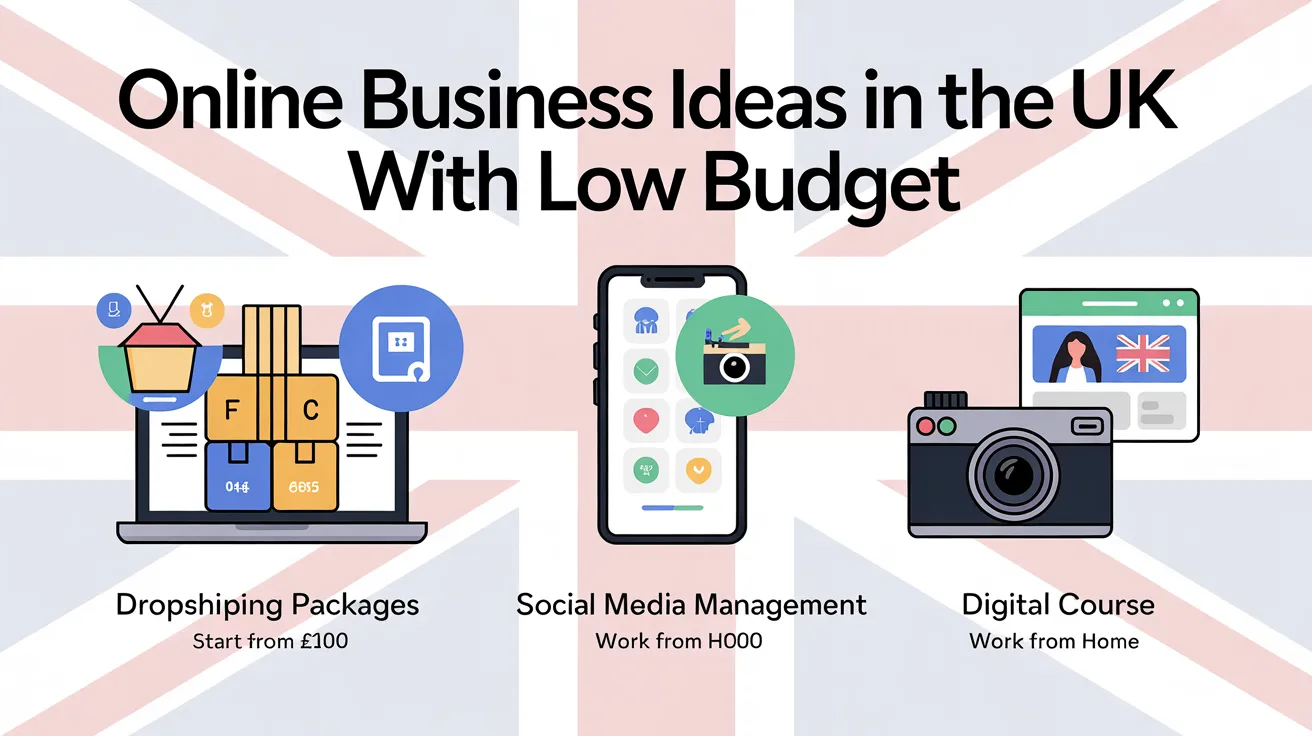
Online Business Ideas in the UK With Low Budget

Online Business Ideas in the UK With Low Budget

Online Business Ideas in the UK With Low Budget (2026 Beginner Guide) Starting an online business in the UK no longer requires thousands of pounds, an office, or a large team. In 2026, many successful entrepreneurs across the United Kingdom started with little money, a laptop, and an internet connection. If you are searching for online business ideas in the UK with low budget, this guide will show you realistic, legal, and beginner-friendly options you can start from home. This article is written for UK beginners — students, freelancers, full-time workers, or anyone looking to build an extra income online without taking big financial risks. These ideas are based on real UK market demand, not “get-rich-quick” promises. Can You Really Start an Online Business in the UK With Low Budget? Yes, you absolutely can. The UK is one of the best countries in the world to start an online business with a low budget. You do not need a physical shop, warehouse, or staff. Many online businesses can be started with £0 to £100. Most low-budget online businesses rely on skills, knowledge, or digital products rather than physical inventory. This reduces risk and allows you to grow step by step. However, it is important to understand that while the financial investment is low, success still requires time, consistency, and learning. Important Things to Know Before Starting an Online Business in the UK Before choosing any online business idea, there are a few important points every UK beginner should understand. First, online income is not instant. Most legitimate online businesses take weeks or months to generate consistent income. Anyone promising fast money is usually not trustworthy. Second, if you earn money online in the UK, you may need to register as self-employed and report income to HMRC. This does not mean complicated paperwork, but it is important for staying legal and stress-free in the long term. Third, focus on one idea at a time. Many beginners fail because they try too many things at once. One clear direction works best. Best Online Business Ideas in the UK With Low Budget Freelancing Services in the UK Freelancing is one of the easiest and lowest-cost online businesses to start in the UK. You offer your skills as a service to clients online. Popular freelance services include content writing, graphic design, digital marketing, virtual assistance, video editing, and website management. Startup cost is very low, often £0 to £50. Many UK freelancers start using free tools and upgrade later. Freelancing is ideal if you want flexible working hours and fast skill-based income. Blogging as an Online Business in the UK Blogging is a long-term online business that can be started with a small budget. You can create a blog focused on a specific UK topic such as online income, health, finance, travel, or education. Income usually comes from display ads, affiliate marketing, and sponsored content. While blogging does not generate instant income, it can become a stable and scalable online business over time. Typical startup cost includes a domain and hosting, usually between £50 and £100 per year. AI-Based Online Business Ideas AI has created new low-budget opportunities in the UK. Many beginners now offer AI-assisted services such as content creation, social media management, resume writing, marketing automation, and chatbot setup for small businesses. You do not need to be a technical expert. Many AI tools are user-friendly and affordable. This type of online business is growing fast in the UK and has strong future potential. Online Coaching or Consulting If you have experience in a specific area such as fitness, education, career guidance, business, or personal development, you can offer online coaching or consulting services. This business requires almost no upfront cost. Sessions are usually done via Zoom or similar platforms. UK clients often prefer local coaches who understand UK systems, culture, and challenges. Affiliate Marketing in the UK Affiliate marketing involves promoting products or services and earning a commission for each sale made through your link. You can promote UK-based products through blogs, YouTube, social media, or email lists. This is a low-budget business, but it requires patience and trust-building. Success depends on honest recommendations and useful content rather than aggressive selling. Selling Digital Products Online Digital products such as e-books, templates, planners, online guides, and AI prompts are very popular in the UK. Once created, they can be sold repeatedly without extra cost. This business model is scalable and low-risk. Many UK creators start by solving a simple problem they already understand. Print-on-Demand Business in the UK Print-on-demand allows you to sell custom designs on products like t-shirts, mugs, and phone cases without holding inventory. Products are printed and shipped only after a customer places an order. Startup cost is low, and many UK suppliers support fast local delivery. This business works best with strong branding and niche targeting. Online Business Ideas UK Students Can Start Students in the UK can start online businesses alongside studies. Popular options include freelancing, tutoring, blogging, social media management, and digital product creation. These businesses offer flexible hours and do not interfere with university schedules. They also help students build skills and experience for future careers. How Much Money Can You Make From an Online Business in the UK? Income varies depending on the business model, skills, and consistency. Some UK beginners earn a few hundred pounds per month in the first three months. With experience and focus, income can grow to £1,000 or more per month within a year. Online business income is not guaranteed, but it is scalable. The more value you provide, the more earning potential you unlock. Common Mistakes UK Beginners Make One common mistake is spending too much money too early. Expensive courses and tools are not required at the start. Another mistake is copying others without understanding the UK market. Many beginners also quit too early. Online business rewards patience and consistency. Treat it like a real business, not a lottery. Is Starting an Online Business Legal in … Read more

Best AI Tools for Freelancers in the UK (2026 Complete Guide)

AI Tools for Freelancers in the UK

Best AI Tools for Freelancers in the UK Freelancing in the UK is more competitive than ever. Whether you are a writer, designer, digital marketer, virtual assistant, or consultant, using the right AI tools for freelancers in the UK can save time, reduce stress, and help you earn more money. In 2026, AI is no longer optional for UK freelancers. It has become a powerful advantage for those who want to work smarter instead of working longer hours. From writing proposals faster to managing clients, creating designs, marketing services, and even handling invoices in pounds (£), AI tools are transforming how freelancers across the United Kingdom work every day. This guide will walk you through the best AI tools for freelancers in the UK, how to use them, and how they can help you grow your freelance income legally and safely. Why UK Freelancers Need AI Tools in 2026 The freelance market in the UK is growing fast, but so is the competition. More people are choosing self-employment, remote work, and online freelancing. At the same time, clients expect faster delivery, better quality, and lower costs. This puts pressure on freelancers who work alone. AI tools help UK freelancers save hours of manual work every week. Tasks that once took hours can now be completed in minutes. This allows freelancers to take on more clients, improve work quality, and still maintain a healthy work-life balance. With the rising cost of living in the UK, increasing efficiency is no longer a luxury. It is a necessity. AI also helps freelancers who are just starting out. Beginners can use AI to improve writing, design, marketing, and communication skills without hiring expensive professionals. Best AI Tools for Freelancers in the UK (By Category) AI Writing Tools for UK Freelancers AI writing tools are extremely useful for freelancers who work as content writers, copywriters, bloggers, virtual assistants, and marketers. These tools help generate ideas, write drafts, improve grammar, and polish content for UK clients. UK freelancers often work with blogs, websites, emails, and social media content. AI writing tools can help speed up this process while keeping the language clear and professional. They are especially helpful for writing proposals, client emails, blog posts, and product descriptions. When using AI writing tools, UK freelancers should always review and edit the content to match client tone and expectations. AI should assist your work, not replace your personal touch. AI Design Tools for Freelancers Freelance designers, social media managers, and content creators in the UK can benefit greatly from AI design tools. These tools help create logos, social media graphics, presentations, thumbnails, and marketing visuals without starting from scratch. AI design tools are ideal for freelancers who work with small UK businesses that need affordable and fast design solutions. They help reduce turnaround time and allow freelancers to deliver professional results even without advanced design skills. This is especially useful for freelancers offering services on a budget while still maintaining high-quality visuals for clients. AI Tools for Marketing and Client Outreach Finding clients is one of the biggest challenges for freelancers in the UK. AI marketing tools help freelancers write better outreach emails, social media posts, ad copy, and promotional content. UK freelancers can use AI to create LinkedIn messages, cold emails, and website content tailored to UK audiences. These tools can also help generate ideas for content marketing, improve engagement, and track campaign performance. By using AI tools for marketing, freelancers can focus more on client work while still growing their personal brand and online presence in the UK market. AI Tools for Productivity and Time Management Many UK freelancers struggle with time management, especially when juggling multiple clients. AI productivity tools help manage tasks, schedules, deadlines, and workflows. These tools can automate repetitive tasks, remind freelancers of deadlines, and organise projects more efficiently. This is especially helpful for remote freelancers in the UK who work flexible hours or across different time zones. Better productivity means less stress, fewer missed deadlines, and more consistent income. AI Tools for Accounting and Invoicing (UK-Specific) One of the most important areas for UK freelancers is managing money. AI-powered accounting and invoicing tools help freelancers create invoices in pounds (£), track income and expenses, and prepare for tax season. These tools are particularly helpful for self-employed freelancers who need to keep records for HMRC. While AI tools do not replace accountants, they make financial management easier and reduce errors. Using AI for invoicing and bookkeeping helps UK freelancers stay organised, compliant, and confident when handling their finances. Free vs Paid AI Tools for Freelancers in the UK Many AI tools offer free plans, which are perfect for beginners or freelancers on a tight budget. Free tools can handle basic tasks like writing drafts, simple designs, and limited automation. Paid AI tools, on the other hand, offer advanced features, better quality output, and more usage limits. For UK freelancers who rely on AI daily, paid tools are often worth the investment. The cost is usually affordable when compared to the time saved and income generated. A smart approach is to start with free versions and upgrade only when your freelance income grows. How UK Freelancers Can Use AI to Earn More Money AI tools help freelancers earn more by increasing efficiency. When you complete tasks faster, you can take on more clients or focus on higher-paying work. AI also improves the quality of proposals, which increases the chances of winning clients. UK freelancers can use AI to: By using AI correctly, freelancers can increase monthly income without working longer hours. Are AI Tools Legal and Safe for Freelancers in the UK? Yes, AI tools are legal to use in the UK. Freelancers are allowed to use AI as long as they follow client agreements and do not mislead clients. Transparency is important, especially when working on creative or sensitive projects. UK freelancers should also be mindful of data privacy and GDPR rules. Avoid uploading confidential client information into AI tools … Read more

How to Start Freelance Digital Marketing in UK

Freelance Digital Marketing in UK

How to Start Freelance Digital Marketing in the UK: A Step-by-Step Guide (2026) The Freelance Digital Marketing in uk landscape in the United Kingdom has shifted dramatically. In 2026, the ‘9-to-5’ office grind in London or Manchester is no longer the only way to build a successful career. From the coastal towns of Cornwall to the tech hubs of Edinburgh, thousands of professionals are ditching the commute to embrace freelance digital marketing. But let’s be honest: starting out is daunting. You aren’t just a marketer anymore; you are a business owner. You have to handle HMRC, find clients in a competitive market, and keep up with AI tools. To choose the right tools for your business, see our detailed guide on the “Best AI Tools for UK Small Businesses.” That seems to change every week. If you’re wondering how to navigate the UK’s freelance world in 2026, this guide is your roadmap. I’ve broken down everything from legal requirements to finding your first high-paying British client. 1. Why Freelance Digital Marketing is Booming in the UK The UK has one of the most advanced digital economies in the world. In 2026, small and medium-sized enterprises (SMEs) make up over 99% of the business population. These businesses are desperate for experts who can help them navigate AI search, social media, and local SEO. Unlike a decade ago, you don’t need to be in a London agency to work with big brands. Remote work culture is now the standard, and British business owners are more comfortable than ever hiring specialist freelancers to handle their growth. 2. Choosing Your Niche in the 2026 Market In the past, you could be a “General Digital Marketer.” Today, that’s a recipe for low pay. To command high rates in the UK, you must specialise. High-demand niches this year include: 3. The Legal Essentials: HMRC, Taxes, and Sole Trader Status This is the part that scares most people, but it’s simpler than you think. In the UK, you have a legal responsibility to declare your income. Registering as a Sole Trader If you earn more than £1,000 in a tax year (6 April to 5 April), you must register as a Sole Trader with HMRC. The £1,000 Trading Allowance Think of this as a “test drive.” If your freelance side-hustle makes less than £1,000 gross in a year, you don’t even need to tell HMRC. Once you cross that line, you are officially in business. Making Tax Digital (MTD) 2026 Update As of April 2026, the UK government has introduced new rules. If your qualifying income is over £50,000, you are now required to keep digital records and send quarterly updates to HMRC using MTD-compatible software (like Xero or QuickBooks). If you earn less, you can still use the traditional annual Self-Assessment system. Event Deadline Tax Year Ends 5 April Deadline to Register 5 October Online Tax Return & Payment 31 January 4. Setting Your Rates: What Should You Charge? One of the most common mistakes UK freelancers make is undercharging. You aren’t just paying for your time; you are paying for your laptop, your software, and your own pension. Human Tip: Always quote in GBP (£). If you work with international clients, use a service like Wise to receive payments without losing a fortune in bank fees. 5. Building a “Human-First” Portfolio In 2026, a CV is just a piece of paper. Clients want to see results. If you don’t have clients yet, create “mock” case studies. Showcasing that you understand the UK consumer mindset is vital. British audiences value authenticity and wit over aggressive “American-style” sales pitches. 6. How to Find High-Paying UK Clients Don’t just hang out on Fiverr competing for £5 jobs. To find quality clients, you need to go where they are. 7. Essential Tools for the UK Marketer in 2026 You can’t do it all alone. Here is the Digital Valley approved toolkit: 8. Avoiding the “Freelance Burnout” Working from home in the UK often means dealing with grey skies and isolation. To stay productive: Frequently Asked Questions (FAQs) Q1: Do I need a degree to be a freelance digital marketer in the UK? Ans: No. While a marketing degree can help, most UK clients care more about your portfolio, certifications (like Google Ads or HubSpot), and your ability to deliver a Return on Investment (ROI). Q2: How do I handle VAT? Ans: You only need to register for VAT if your taxable turnover exceeds £90,000 (2024/25/26 threshold) in a 12-month period. If you are below this, you don’t need to worry about charging VAT to your clients. Q3: Is the market too saturated in 2026? Ans: The market for average marketers is saturated. The market for experts who understand AI, data, and the UK business culture is hungrier than ever. Q4: Can I freelance while working a full-time job? Ans: Yes, this is called “Side-Hustling.” Just check your current employment contract for any “non-compete” clauses that might prevent you from working with similar clients. Conclusion: Freelance Digital Marketing in UK Starting a freelance digital marketing career in the UK is a journey, not a sprint. By focusing on a niche, staying compliant with HMRC, and leveraging the latest AI tools, you can build a business that offers both freedom and financial security. Welcome to the Digital Valley—where your skills meet opportunity. The future of work is here, and it’s yours for the taking.

Top 7 AI Tools for UK Small Businesses in 2026: The Ultimate Guide

AI Tools for UK Small Businesses

The Ultimate Guide to AI Tools for UK Small Businesses in 2026: Boosting Productivity and Growth The digital landscape in the United Kingdom has undergone a seismic shift. As we move through 2026, the adoption of Artificial Intelligence (AI) is no longer a luxury reserved for tech giants in Silicon Valley or London’s Shoreditch; it has become the backbone of competitive small and medium-sized enterprises (SMEs) across the UK. From local boutiques in Manchester to consultancy firms in Edinburgh, AI tools are redefining how British entrepreneurs manage time, costs, and creativity. For a small business, the primary challenge is often “wearing too many hats.” You are the CEO, the marketer, the accountant, and the customer service representative. This is where AI steps in as your virtual workforce. In this guide, we explore the top AI tools that are essential for UK business owners to scale efficiently this year. 1. Generative Content & Strategy: ChatGPT and Google Gemini Content remains king, but in 2026, the volume of content required to stay relevant is staggering. For UK businesses, the ability to produce high-quality, British-English content is vital. Why they are essential: ChatGPT (OpenAI) and Gemini (Google) have evolved beyond simple chatbots. They are now sophisticated strategic partners. Whether you need to draft a formal proposal for a client in Bristol or create a series of LinkedIn posts for a London tech audience, these tools understand nuance and regional tone. 2. Visual Excellence without the Agency Price Tag: Canva Magic Studio In the UK, visual branding is a key differentiator. However, hiring a professional design agency for every social media post or flyer can drain a small business’s budget. The AI Revolution in Design: Canva’s Magic Studio has democratised design. Its AI features allow users to: 3. Mastering the Video Trend: CapCut AI and Descript Video content is currently the highest-performing medium on UK social media. If your business isn’t on TikTok, Reels, or YouTube Shorts, you are missing out on a massive demographic. Professional Editing for Non-Editors: 4. Administrative Efficiency: Notion AI and Otter.ai The average UK business owner spends nearly 15 hours a week on administrative tasks. AI can cut this in half. Organizing the Chaos: 5. Customer Relationship Management: HubSpot AI In Britain, customer service is often the deciding factor for brand loyalty. Managing those relationships at scale requires more than just a spreadsheet. Smart CRM: HubSpot’s AI tools help small businesses predict which leads are most likely to convert. 6. Financial Oversight: Xero and QuickBooks AI The UK tax system, with VAT and Making Tax Digital (MTD) requirements, can be a headache for small business owners. Automated Bookkeeping: Tools like Xero and QuickBooks have integrated AI that: 7. Global Reach, Local Feel: DeepL for Translation Even if you are a UK-based business, 2026 is the year of the global micro-enterprise. If you want to sell your products to France, Germany, or Spain, you need accurate translation. Why DeepL beats Google Translate: DeepL uses advanced neural networks to provide translations that sound human. Unlike older tools that translate literally, DeepL understands context. This ensures that your “British Wit” or professional tone isn’t lost in translation when communicating with European partners.+1 Implementation Strategy: How to Start Don’t try to adopt all seven tools at once. This leads to “software fatigue.” Instead, follow this Digital Valley roadmap: Conclusion The rise of AI in 2026 represents the greatest opportunity for UK small businesses in a generation. By leveraging these tools, a one-person shop in the Cotswolds can compete with a multinational corporation in London. AI doesn’t replace the human touch; it removes the mechanical burden, allowing you to focus on what you do best: building your business. Welcome to the future of the Digital Valley. Frequently Asked Questions (FAQs) Q1: Are these AI tools compliant with UK GDPR regulations? Ans: Most major AI tools like ChatGPT, Google Gemini, and HubSpot have updated their privacy policies to be GDPR compliant. However, as a UK business owner, you should always ensure that you are not inputting sensitive customer personal data into public AI models without proper data processing agreements. Q2: Do I need a high-speed internet connection to use these tools in the UK? Ans: Yes, since most of these tools are cloud-based (SaaS), a stable fibre broadband connection is recommended. This ensures real-time syncing for tools like Xero and seamless video rendering in CapCut or Canva. Q3: Can AI tools accurately understand and write in British English? Ans: Absolutely. Tools like ChatGPT and Claude allow you to set your preference to British English. This ensures they use correct spellings (like “optimise” instead of “optimize”) and use £GBP instead of $USD when discussing financial figures. Q4: Is it expensive for a startup to implement AI automation? Ans: Not at all. Many of the tools mentioned, such as Notion, Canva, and Buffer, offer robust “Freemium” plans. You can start automating your core processes for £0 and only upgrade to paid tiers as your business revenue grows. Q5: Will AI replace my small team? Ans: No. In 2026, AI is seen as a “Co-pilot” rather than a replacement. It handles the repetitive, mundane tasks, allowing your UK team to focus on high-level strategy, creative thinking, and building personal relationships with your British clients.

Universal Technology Corporation: Engineer-Led IT Solutions UK

Universal Technology Corporation

In an era of rapid digital transformation, businesses in the United Kingdom are navigating a complex landscape of cyber security threats, cloud migrations, and the constant need for infrastructure modernization. Amidst this, Universal Technologies Ltd (often referred to as Universal Technology or UTL) has emerged as a cornerstone of the UK’s ICT and communications sector. Headquartered in Liverpool and serving a diverse clientele across the British Isles, the company has built its reputation on a simple but powerful philosophy: providing engineer-led, bespoke solutions that move beyond the limitations of “off-the-shelf” technology.1 A Heritage of Engineering Excellence Founded in 2005, Universal Technology was born out of a perceived gap in the UK market. The founders—a group of experienced engineers—noted that many IT providers were becoming increasingly sales-focused, prioritizing product quotas over genuine problem-solving. Universal Technology chose a different path. By positioning themselves as a consultancy rather than just a reseller, they focused on the long-term health of their clients’ digital environments.2 Today, with nearly two decades of growth, they serve as a strategic partner for Small to Medium-sized Enterprises (SMEs), industrial firms, and the education sector.3 Core Competencies and Services The UK business landscape is unique, with stringent regulatory requirements like GDPR and a high demand for hybrid working solutions. Universal Technology has tailored its service portfolio to meet these specific local needs. 1. Managed IT and Infrastructure4 At the heart of their operation is a commitment to robust infrastructure.5 For many UK businesses, legacy hardware is a significant bottleneck. Universal provides: 2. Cloud Migration and Security The shift to the cloud is no longer optional for British businesses looking to remain competitive. However, the move can be daunting. Universal Technology acts as a guide through this transition, specializing in: 3. Unified Communications The way we work in the UK has changed. Remote and hybrid models require seamless communication. Through partnerships with providers like 3CX, Universal offers VoIP (Voice over Internet Protocol) solutions that integrate mobile, desktop, and office phones into a single, cohesive system.9 Supporting the UK Education Sector One of Universal Technology’s most significant contributions is its work within British schools and colleges. Managing IT in an educational setting requires a specialized touch—budgets are tight, and security is paramount to protect student data. Universal’s engineers are all DBS (Disclosure and Barring Service) cleared, a prerequisite for working in UK educational environments.10 They help primary and secondary schools modernize their classrooms with reliable Wi-Fi, interactive displays, and secure student networks, ensuring that technology serves as a tool for learning rather than a distraction for staff. Why the “Engineer-Led” Model Matters In the UK’s competitive tech market, many firms outsource their technical support to overseas call centers. Universal Technology maintains a firm grip on quality by employing its own team of local specialists.11 Feature Universal Technology Approach Standard Retail Approach Consultation Technical workshop to identify needs Sales-pitch focused on high-margin products Implementation Dedicated project management Third-party contractors Support Direct access to the engineers who built the system Tiered help-desk with long wait times Customization Bespoke architecture One-size-fits-all packages Navigating the 2026 Technological Landscape As we move into 2026, the technological demands on UK businesses are evolving. The integration of AI, the expansion of the “Internet of Things” (IoT) in industrial sectors, and the increasing sophistication of cyber-attacks require a partner who stays ahead of the curve. Universal Technology continues to invest in the latest training for its staff, focusing on Zero Trust security architectures and sustainable IT practices. In a country increasingly focused on Net Zero goals, Universal helps clients reduce their carbon footprint by consolidating servers and moving to energy-efficient cloud data centers. Strategic Partnerships Universal’s ability to deliver high-end results is bolstered by its relationships with global technology leaders. By collaborating with brands like Dell, Microsoft, and 3CX, they bring world-class hardware and software to the UK market, backed by local expertise.12 This “Global Tech, Local Touch” approach ensures that even a small business in the North West can access the same level of technology used by multinational corporations. Conclusion: A Partner for the Long Term Universal Technology Corporation (Universal Technologies Ltd) stands out in the United Kingdom not just for what they do, but for how they do it. In an industry often criticized for being impersonal, they have maintained a culture where they act as an extension of their client’s own team.13 Whether it’s a school looking to upgrade its Wi-Fi, a law firm needing to secure its client data, or an industrial plant automating its communications, Universal provides the engineering backbone that keeps the UK’s economy moving forward. Their success is a testament to the fact that in the world of high-tech, human expertise and a partnership-first mindset are still the most valuable commodities.

Best Online Tools for Small Businesses in the UK

Best Online Tools for Small Businesses in the UK

Best Online Tools for Small Businesses in the UK (2025 Practical Guide) Running a small business in the UK often means managing everything yourself — from emails and invoices to marketing and customer communication. Unlike large companies, small businesses often lack the budget to hire teams or invest in expensive software. This is where online tools make a real difference. Online tools help UK small businesses work smarter, stay organised, and look professional without heavy costs. This guide is written for UK-based small business owners, freelancers, and beginners who want to understand which online tools are genuinely useful, how to use them effectively, and how to avoid unnecessary complexity. What Are Online Tools and Why Do They Matter? Online tools are web-based platforms that help you perform business tasks without installing heavy software. You can access them from any device with an internet connection. For UK businesses, online tools matter because they: Most importantly, many online tools offer free plans, making them ideal for sole traders and startups. 1. Online Tools for Business Administration Administrative tasks can quickly become overwhelming. Common admin tasks supported by online tools: For UK businesses, tools that support GBP (£) pricing and simple record-keeping are especially useful. These tools help you stay organised and reduce stress during tax season. 2. Online Tools for Communication and Collaboration Clear communication is essential for any business. Online communication tools help with: Many UK freelancers and remote teams rely on these tools to work efficiently with clients across different locations. 3. Online Tools for Marketing and Growth Marketing doesn’t have to be complicated or expensive. Online marketing tools help small UK businesses: These tools allow beginners to promote their services without hiring marketing agencies. 4. Online Tools for Content and Writing Content plays a major role in building trust and visibility online. Online writing tools help with: For UK audiences, tools that support UK English spelling and tone are particularly valuable. 5. Online Tools for Design and Visual Content Professional visuals improve credibility. Online design tools help create: These tools are ideal for small businesses without access to professional designers. 6. Online Tools for Productivity and Time Management Time is one of the most valuable resources for small business owners. Productivity tools help by: Freelancers and consultants in the UK often use these tools to balance multiple clients efficiently. 7. Online Tools for Website and Performance Management A professional online presence builds trust. Website-related tools help with: These tools support bloggers, service providers, and online businesses in maintaining a reliable website. How to Choose the Right Online Tools (UK Perspective) With so many tools available, beginners often feel confused. From real experience, UK small businesses should consider: Start with a small set of tools and expand gradually. Common Mistakes to Avoid Many beginners make these mistakes: Simple systems often work better than advanced setups. EEAT Perspective: Real Experience & Trust Successful UK businesses use online tools as support systems, not shortcuts. Tools help manage work efficiently, but trust is built through consistency, accuracy, and professionalism. Online tools should simplify your work — not complicate it. Are Online Tools Safe and Legal to Use in the UK? Yes, online tools are legal to use in the UK. However, businesses should: Responsible usage ensures long-term reliability and trust. Future of Online Tools for UK Businesses Online tools are becoming more accessible, affordable, and specialised. As remote work and digital businesses grow in the UK, online tools will continue to play a central role in how small businesses operate. Learning to use them early gives businesses a competitive advantage. Final Thoughts Online tools empower UK small businesses to operate professionally, stay organised, and grow sustainably. Whether you are a freelancer, startup founder, or small business owner, the right tools can save time and reduce stress. FAQs Q1. What are online tools for small businesses? Online tools are web-based platforms that help small businesses manage tasks such as invoicing, communication, marketing, and productivity without installing heavy software. Q2. Are online tools suitable for UK freelancers and sole traders? Yes, many online tools are ideal for UK freelancers and sole traders because they are affordable, easy to use, and accessible from anywhere. Q3. Are free online tools enough for UK small businesses? For most beginners, free online tools are sufficient at the early stage. Paid versions can be considered as the business grows. Q4. Are online tools safe to use in the UK? Yes, reputable online tools are safe when used responsibly. Businesses should review privacy policies and avoid sharing sensitive personal data. Q5. Do online tools help with remote work in the UK? Yes, online tools support remote work by enabling communication, collaboration, and productivity for UK-based remote teams and freelancers.

Best AI Tools for Small Businesses in the UK

best AI tools for small businesses in UK

Best AI Tools for Small Businesses in the UK (2025-26 Practical Guide) Artificial Intelligence (AI) is no longer something only large companies can afford or understand. In the UK, small businesses, freelancers, and startups are increasingly using AI tools to save time, reduce costs, and work more efficiently. From writing emails and creating content to analysing data and managing customer support, AI tools are quietly transforming how work gets done. This article is written for UK small business owners, freelancers, and beginners who want to understand which AI tools are actually useful, how to use them responsibly, and how to avoid wasting money on tools they don’t need. Why AI Tools Matter for UK Small Businesses Running a small business in the UK often means juggling multiple roles at once. AI tools help by automating repetitive tasks and supporting decision-making. For UK businesses, AI tools can help: Importantly, many AI tools now offer free plans, making them accessible to sole traders and startups. 1. AI Writing & Content Tools AI writing tools are among the most popular tools used by UK businesses today. How they help: These tools are especially useful for: AI writing tools should be used as assistants, not replacements. Human editing and real experience are still essential for trust and quality. 2. AI Tools for Marketing & SEO Marketing is one area where AI tools provide significant value. Common uses: For UK businesses targeting local or national audiences, AI tools help identify content gaps and improve visibility without hiring expensive consultants. 3. AI Tools for Customer Support Many UK businesses now use AI to support customer communication. What these tools do: AI chat tools are widely used by: They improve customer experience while keeping support costs manageable. 4. AI Tools for Design & Visual Content Visual content plays an important role in online branding. AI design tools help with: For small UK businesses without design teams, these tools offer a practical way to maintain a professional appearance. 5. AI Tools for Productivity & Admin Tasks AI tools are increasingly used for day-to-day productivity. Examples include: These tools are especially helpful for freelancers and remote workers who want to reduce manual work and stay organised. Choosing the Right AI Tools (UK Perspective) Not every AI tool is right for every business. From experience, UK small businesses should consider: Start with one or two tools and expand only when there is a clear benefit. Are AI Tools Safe and Legal to Use in the UK? Yes, AI tools are legal to use in the UK, but businesses should use them responsibly. Best practices include: AI should support ethical and professional business practices, not replace accountability. EEAT Perspective: Real Experience & Trust From real-world usage, the most successful UK businesses use AI tools to enhance human effort, not replace it. AI can speed up tasks, but trust is built through accuracy, experience, and honesty. Businesses that combine AI efficiency with human judgement see the best results. Common Mistakes UK Businesses Should Avoid AI works best when integrated gradually into existing workflows. Future of AI Tools for UK Businesses AI adoption in the UK is expected to grow steadily. Tools will become more specialised, affordable, and easier to use. Small businesses that learn to use AI responsibly today will be better prepared for the future. Final Thoughts AI tools offer UK small businesses a powerful opportunity to work smarter, not harder. Whether you are a freelancer, startup founder, or small business owner, AI can help you save time and stay competitive — if used wisely. FAQs Q1. Are AI tools suitable for small businesses in the UK? Yes, many AI tools are designed specifically to help UK small businesses save time, automate tasks, and improve productivity without high costs. Q2. Can beginners use AI tools without technical skills? Yes, most modern AI tools are beginner-friendly and require no coding or advanced technical knowledge. Q3. Are AI tools legal to use for businesses in the UK? Yes, AI tools are legal in the UK when used responsibly and in line with data protection and ethical guidelines. Q4. Do AI tools replace human workers? No, AI tools support human work by handling repetitive tasks. Human judgement, experience, and trust remain essential. Q5. Are free AI tools enough for UK small businesses? For many small businesses and freelancers, free AI tools are sufficient at the early stage. Paid tools can be considered as the business grows.

How to Start an Online Business in the UK with a Low Budget

Start an online business in the UK

How to Start an Online Business in the UK with Low Budget (Beginner-Friendly Guide) Starting an online business in the UK no longer requires a large investment or technical background. Today, many people build profitable online businesses using simple tools, clear strategies, and consistent effort. This guide is written for beginners in the UK who want realistic, legal, and sustainable ways to start an online business — without falling for shortcuts or unrealistic promises. Why Online Businesses Are Growing in the UK The UK offers a strong environment for online businesses due to: Online businesses also offer: Step 1: Choose a Simple Online Business Model Beginners should avoid complex models. Beginner-friendly options: Choose a model that matches your skills and time availability. Step 2: Pick a Focused Niche (Very Important) A niche defines who you serve. Good beginner niches in the UK include: Focused niches build trust faster and are easier to monetise. Step 3: Set Up the Basics Legally In the UK, many online businesses start as sole traders. Key steps include: Staying organised early avoids stress later. Step 4: Build a Simple Online Presence You don’t need a complex website. Start with: A simple site builds credibility and supports long-term growth. Step 5: Create Helpful Content (Not Salesy) UK audiences value honesty and clarity. Content should: Helpful content builds trust and repeat visitors. Step 6: Monetise Slowly and Ethically Avoid rushing into monetisation. Begin with: Ethical monetisation supports long-term sustainability. Step 7: Be Consistent and Patient Online businesses grow gradually. From experience: Avoid comparing your journey with others. Common Beginner Mistakes Success comes from steady improvement. EEAT Perspective: Real Experience & Trust Most successful UK online businesses are built quietly — through useful content, clear values, and consistency. There are no shortcuts, only systems and patience. Final Thoughts Starting an online business in the UK is achievable for beginners who focus on value, clarity, and long-term thinking. FAQs Q1. Can I start an online business in the UK with little money?Yes, many online businesses in the UK start with minimal costs using free tools and simple websites. Q2. Do I need to register a business immediately in the UK?Not always. Many beginners start as sole traders and register when income becomes consistent. Q3. How long does it take to earn from an online business in the UK?Most online businesses take time to grow. Consistency and quality matter more than speed.

Choose Digital Tools For Small Business UK

Choose Digital Tools For Small Business UK

How to Choose the Right Digital Tools for Your Small Business in the UK (Complete Beginner Guide) Choose Digital Tools For Small Business UK: is one of the most important decisions a small business owner can make in the UK. With hundreds of software options available, beginners often feel confused and overwhelmed. Many business owners either choose tools that are too advanced or end up paying for software they barely use. This guide is written from a practical UK small business perspective, focusing on real needs rather than marketing hype. Whether you are a sole trader, freelancer, or running a small limited company, this article will help you make smart, confident decisions. Why Choosing the Right Tools Matters In the UK, small businesses operate under tight budgets and strict time constraints. The wrong tools can: The right tools, on the other hand, help you: Step 1: Understand Your Business Type (UK Context) Before choosing any digital tool, you must clearly understand your business structure. Common UK business types: Each business type has different needs. For example, a sole trader may need simple invoicing, while a small agency may require project management and collaboration tools. Step 2: Identify Your Core Business Needs Many beginners make the mistake of choosing tools first and planning later. Instead, ask yourself: Write down only essential needs. This prevents overcomplicating your setup. Step 3: Start with Free or Trial-Based Tools From experience, UK small businesses benefit greatly from starting with free tools. Why free tools are ideal: Many free tools are sufficient for: Upgrading should only happen when the tool directly supports growth. Step 4: Prioritise Ease of Use Over Features A tool with too many features often creates confusion. When evaluating tools, consider: A tool you actually use daily is more valuable than a powerful tool you avoid. Step 5: Consider UK Compliance & Practicality UK businesses must consider local practices. Examples: Tools that align with UK standards reduce administrative stress. Step 6: Think Long-Term, Not Just Today A common mistake is choosing tools that only solve short-term problems. Ask: Good tools support growth without forcing sudden changes. Common Mistakes to Avoid From real-world experience, beginners often: Start simple. Build systems gradually. EEAT Perspective: Real Experience & Trust Most UK small businesses succeed not because of fancy software, but because of consistent systems. The right tools support habits, organisation, and decision-making. Tools should work for you, not control your workflow. Final Thoughts Choosing the right digital tools in the UK doesn’t require expert knowledge — just clarity, patience, and practical thinking. Start small, test carefully, and grow confidently. FAQs Q1. Why is choosing the right digital tools important for UK small businesses?Choosing the right tools helps UK businesses save time, reduce costs, and stay organised without paying for unnecessary software. Q2. Should UK beginners start with free digital tools?Yes, free tools are ideal for beginners because they allow testing without financial risk. Q3. Do digital tools need to be UK-specific?Not always, but tools that support GBP, VAT fields, and UK workflows are more practical.