Best Passive Income Ideas UK 2026

Passive Income Ideas UK 2026

15 Best Passive Income Ideas UK (2026): The Ultimate Guide to Financial Freedom Passive Income Ideas UK 2026, the traditional 9-to-5 model is being challenged by the “Side Hustle Revolution”. With UK inflation and housing costs remaining high, building a secondary, automated income stream is no longer just a hobby—it’s a survival strategy. Passive income is defined as money earned with little to no daily effort once the initial work is completed. In this 2026 updated guide, we explore the most tax-efficient and scalable ways to earn money while you sleep in the United Kingdom. 1. Digital Assets: Creating Intellectual Property The beauty of digital products is that they have zero “per-unit” cost. Once the asset is created, you can sell it to 10 or 10,000 people without extra work. 2. The Power of Affiliate Marketing in 2026 Affiliate marketing is the cornerstone of successful UK blogs like digital-valley.co.uk. You earn a commission by promoting other companies’ products. 3. Investing for Dividends: The Tax-Efficient Way Investing is the purest form of passive income. In the UK, the government provides specific “wrappers” to protect your earnings from the taxman. 4. Property-Based Passive Income (Without a Mortgage) While traditional Buy-to-Let has become tax-heavy in 2026, creative property strategies are thriving. 5. Content Monetization and Ad Revenue If your blog gains significant traffic, you can automate your income through display ads. 6. Peer-to-Peer (P2P) Lending In 2026, P2P platforms allow you to act as the bank. You lend your money to individuals or small businesses in the UK and earn interest in return. 7. High-Yield Savings and Cash ISAs With UK interest rates remaining higher than the previous decade, even “safe” money can generate passive income. 8. Print on Demand (POD) This is a low-risk e-commerce model. You design products (T-shirts, mugs, posters) and list them on your site or Etsy. 9. 2026 UK Tax Rules Every Passive Earner Must Know HMRC is very active in monitoring digital income in 2026. 10. Summary Checklist for Success More Related Article

Online Business Ideas in the UK With Low Budget

Online Business Ideas in the UK With Low Budget

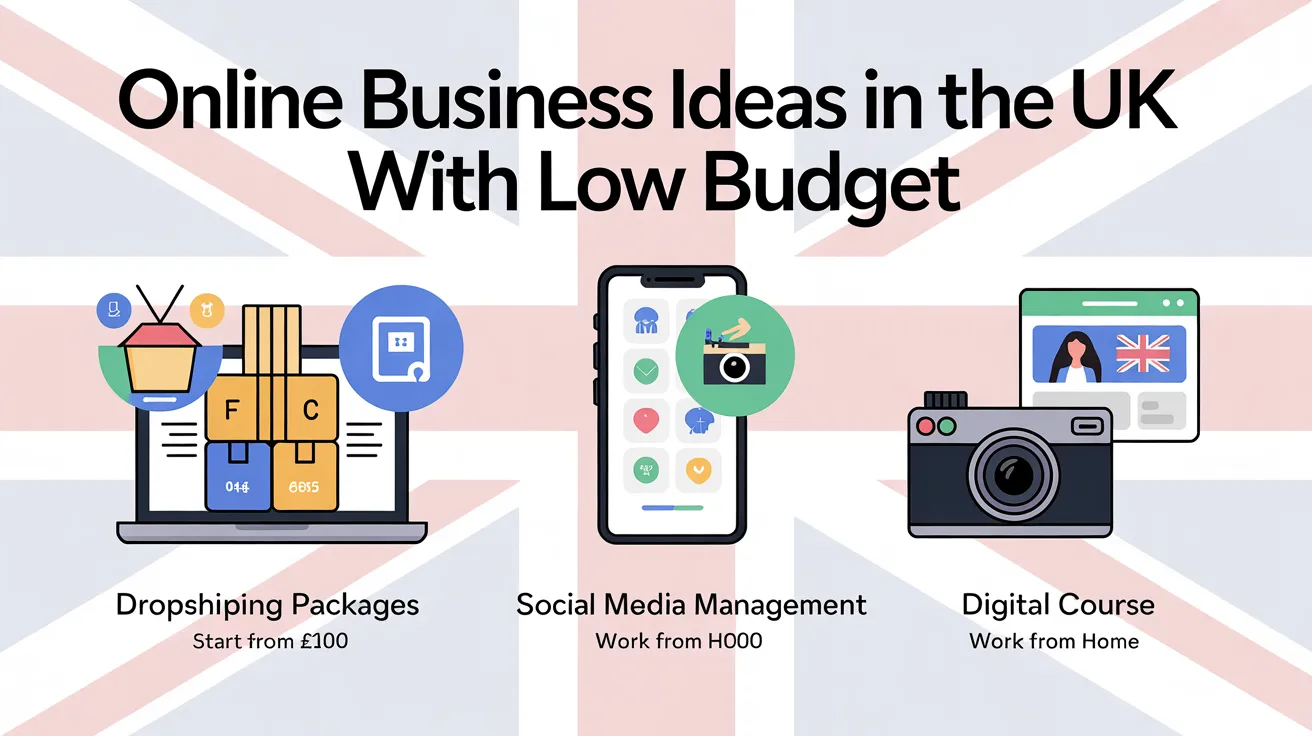
Online Business Ideas in the UK With Low Budget (2026 Beginner Guide) Starting an online business in the UK no longer requires thousands of pounds, an office, or a large team. In 2026, many successful entrepreneurs across the United Kingdom started with little money, a laptop, and an internet connection. If you are searching for online business ideas in the UK with low budget, this guide will show you realistic, legal, and beginner-friendly options you can start from home. This article is written for UK beginners — students, freelancers, full-time workers, or anyone looking to build an extra income online without taking big financial risks. These ideas are based on real UK market demand, not “get-rich-quick” promises. Can You Really Start an Online Business in the UK With Low Budget? Yes, you absolutely can. The UK is one of the best countries in the world to start an online business with a low budget. You do not need a physical shop, warehouse, or staff. Many online businesses can be started with £0 to £100. Most low-budget online businesses rely on skills, knowledge, or digital products rather than physical inventory. This reduces risk and allows you to grow step by step. However, it is important to understand that while the financial investment is low, success still requires time, consistency, and learning. Important Things to Know Before Starting an Online Business in the UK Before choosing any online business idea, there are a few important points every UK beginner should understand. First, online income is not instant. Most legitimate online businesses take weeks or months to generate consistent income. Anyone promising fast money is usually not trustworthy. Second, if you earn money online in the UK, you may need to register as self-employed and report income to HMRC. This does not mean complicated paperwork, but it is important for staying legal and stress-free in the long term. Third, focus on one idea at a time. Many beginners fail because they try too many things at once. One clear direction works best. Best Online Business Ideas in the UK With Low Budget Freelancing Services in the UK Freelancing is one of the easiest and lowest-cost online businesses to start in the UK. You offer your skills as a service to clients online. Popular freelance services include content writing, graphic design, digital marketing, virtual assistance, video editing, and website management. Startup cost is very low, often £0 to £50. Many UK freelancers start using free tools and upgrade later. Freelancing is ideal if you want flexible working hours and fast skill-based income. Blogging as an Online Business in the UK Blogging is a long-term online business that can be started with a small budget. You can create a blog focused on a specific UK topic such as online income, health, finance, travel, or education. Income usually comes from display ads, affiliate marketing, and sponsored content. While blogging does not generate instant income, it can become a stable and scalable online business over time. Typical startup cost includes a domain and hosting, usually between £50 and £100 per year. AI-Based Online Business Ideas AI has created new low-budget opportunities in the UK. Many beginners now offer AI-assisted services such as content creation, social media management, resume writing, marketing automation, and chatbot setup for small businesses. You do not need to be a technical expert. Many AI tools are user-friendly and affordable. This type of online business is growing fast in the UK and has strong future potential. Online Coaching or Consulting If you have experience in a specific area such as fitness, education, career guidance, business, or personal development, you can offer online coaching or consulting services. This business requires almost no upfront cost. Sessions are usually done via Zoom or similar platforms. UK clients often prefer local coaches who understand UK systems, culture, and challenges. Affiliate Marketing in the UK Affiliate marketing involves promoting products or services and earning a commission for each sale made through your link. You can promote UK-based products through blogs, YouTube, social media, or email lists. This is a low-budget business, but it requires patience and trust-building. Success depends on honest recommendations and useful content rather than aggressive selling. Selling Digital Products Online Digital products such as e-books, templates, planners, online guides, and AI prompts are very popular in the UK. Once created, they can be sold repeatedly without extra cost. This business model is scalable and low-risk. Many UK creators start by solving a simple problem they already understand. Print-on-Demand Business in the UK Print-on-demand allows you to sell custom designs on products like t-shirts, mugs, and phone cases without holding inventory. Products are printed and shipped only after a customer places an order. Startup cost is low, and many UK suppliers support fast local delivery. This business works best with strong branding and niche targeting. Online Business Ideas UK Students Can Start Students in the UK can start online businesses alongside studies. Popular options include freelancing, tutoring, blogging, social media management, and digital product creation. These businesses offer flexible hours and do not interfere with university schedules. They also help students build skills and experience for future careers. How Much Money Can You Make From an Online Business in the UK? Income varies depending on the business model, skills, and consistency. Some UK beginners earn a few hundred pounds per month in the first three months. With experience and focus, income can grow to £1,000 or more per month within a year. Online business income is not guaranteed, but it is scalable. The more value you provide, the more earning potential you unlock. Common Mistakes UK Beginners Make One common mistake is spending too much money too early. Expensive courses and tools are not required at the start. Another mistake is copying others without understanding the UK market. Many beginners also quit too early. Online business rewards patience and consistency. Treat it like a real business, not a lottery. Is Starting an Online Business Legal in … Read more

How to Start Freelance Digital Marketing in UK

Freelance Digital Marketing in UK

How to Start Freelance Digital Marketing in the UK: A Step-by-Step Guide (2026) The Freelance Digital Marketing in uk landscape in the United Kingdom has shifted dramatically. In 2026, the ‘9-to-5’ office grind in London or Manchester is no longer the only way to build a successful career. From the coastal towns of Cornwall to the tech hubs of Edinburgh, thousands of professionals are ditching the commute to embrace freelance digital marketing. But let’s be honest: starting out is daunting. You aren’t just a marketer anymore; you are a business owner. You have to handle HMRC, find clients in a competitive market, and keep up with AI tools. To choose the right tools for your business, see our detailed guide on the “Best AI Tools for UK Small Businesses.” That seems to change every week. If you’re wondering how to navigate the UK’s freelance world in 2026, this guide is your roadmap. I’ve broken down everything from legal requirements to finding your first high-paying British client. 1. Why Freelance Digital Marketing is Booming in the UK The UK has one of the most advanced digital economies in the world. In 2026, small and medium-sized enterprises (SMEs) make up over 99% of the business population. These businesses are desperate for experts who can help them navigate AI search, social media, and local SEO. Unlike a decade ago, you don’t need to be in a London agency to work with big brands. Remote work culture is now the standard, and British business owners are more comfortable than ever hiring specialist freelancers to handle their growth. 2. Choosing Your Niche in the 2026 Market In the past, you could be a “General Digital Marketer.” Today, that’s a recipe for low pay. To command high rates in the UK, you must specialise. High-demand niches this year include: 3. The Legal Essentials: HMRC, Taxes, and Sole Trader Status This is the part that scares most people, but it’s simpler than you think. In the UK, you have a legal responsibility to declare your income. Registering as a Sole Trader If you earn more than £1,000 in a tax year (6 April to 5 April), you must register as a Sole Trader with HMRC. The £1,000 Trading Allowance Think of this as a “test drive.” If your freelance side-hustle makes less than £1,000 gross in a year, you don’t even need to tell HMRC. Once you cross that line, you are officially in business. Making Tax Digital (MTD) 2026 Update As of April 2026, the UK government has introduced new rules. If your qualifying income is over £50,000, you are now required to keep digital records and send quarterly updates to HMRC using MTD-compatible software (like Xero or QuickBooks). If you earn less, you can still use the traditional annual Self-Assessment system. Event Deadline Tax Year Ends 5 April Deadline to Register 5 October Online Tax Return & Payment 31 January 4. Setting Your Rates: What Should You Charge? One of the most common mistakes UK freelancers make is undercharging. You aren’t just paying for your time; you are paying for your laptop, your software, and your own pension. Human Tip: Always quote in GBP (£). If you work with international clients, use a service like Wise to receive payments without losing a fortune in bank fees. 5. Building a “Human-First” Portfolio In 2026, a CV is just a piece of paper. Clients want to see results. If you don’t have clients yet, create “mock” case studies. Showcasing that you understand the UK consumer mindset is vital. British audiences value authenticity and wit over aggressive “American-style” sales pitches. 6. How to Find High-Paying UK Clients Don’t just hang out on Fiverr competing for £5 jobs. To find quality clients, you need to go where they are. 7. Essential Tools for the UK Marketer in 2026 You can’t do it all alone. Here is the Digital Valley approved toolkit: 8. Avoiding the “Freelance Burnout” Working from home in the UK often means dealing with grey skies and isolation. To stay productive: Frequently Asked Questions (FAQs) Q1: Do I need a degree to be a freelance digital marketer in the UK? Ans: No. While a marketing degree can help, most UK clients care more about your portfolio, certifications (like Google Ads or HubSpot), and your ability to deliver a Return on Investment (ROI). Q2: How do I handle VAT? Ans: You only need to register for VAT if your taxable turnover exceeds £90,000 (2024/25/26 threshold) in a 12-month period. If you are below this, you don’t need to worry about charging VAT to your clients. Q3: Is the market too saturated in 2026? Ans: The market for average marketers is saturated. The market for experts who understand AI, data, and the UK business culture is hungrier than ever. Q4: Can I freelance while working a full-time job? Ans: Yes, this is called “Side-Hustling.” Just check your current employment contract for any “non-compete” clauses that might prevent you from working with similar clients. Conclusion: Freelance Digital Marketing in UK Starting a freelance digital marketing career in the UK is a journey, not a sprint. By focusing on a niche, staying compliant with HMRC, and leveraging the latest AI tools, you can build a business that offers both freedom and financial security. Welcome to the Digital Valley—where your skills meet opportunity. The future of work is here, and it’s yours for the taking.

How to Start an Online Business in the UK with a Low Budget

Start an online business in the UK

How to Start an Online Business in the UK with Low Budget (Beginner-Friendly Guide) Starting an online business in the UK no longer requires a large investment or technical background. Today, many people build profitable online businesses using simple tools, clear strategies, and consistent effort. This guide is written for beginners in the UK who want realistic, legal, and sustainable ways to start an online business — without falling for shortcuts or unrealistic promises. Why Online Businesses Are Growing in the UK The UK offers a strong environment for online businesses due to: Online businesses also offer: Step 1: Choose a Simple Online Business Model Beginners should avoid complex models. Beginner-friendly options: Choose a model that matches your skills and time availability. Step 2: Pick a Focused Niche (Very Important) A niche defines who you serve. Good beginner niches in the UK include: Focused niches build trust faster and are easier to monetise. Step 3: Set Up the Basics Legally In the UK, many online businesses start as sole traders. Key steps include: Staying organised early avoids stress later. Step 4: Build a Simple Online Presence You don’t need a complex website. Start with: A simple site builds credibility and supports long-term growth. Step 5: Create Helpful Content (Not Salesy) UK audiences value honesty and clarity. Content should: Helpful content builds trust and repeat visitors. Step 6: Monetise Slowly and Ethically Avoid rushing into monetisation. Begin with: Ethical monetisation supports long-term sustainability. Step 7: Be Consistent and Patient Online businesses grow gradually. From experience: Avoid comparing your journey with others. Common Beginner Mistakes Success comes from steady improvement. EEAT Perspective: Real Experience & Trust Most successful UK online businesses are built quietly — through useful content, clear values, and consistency. There are no shortcuts, only systems and patience. Final Thoughts Starting an online business in the UK is achievable for beginners who focus on value, clarity, and long-term thinking. FAQs Q1. Can I start an online business in the UK with little money?Yes, many online businesses in the UK start with minimal costs using free tools and simple websites. Q2. Do I need to register a business immediately in the UK?Not always. Many beginners start as sole traders and register when income becomes consistent. Q3. How long does it take to earn from an online business in the UK?Most online businesses take time to grow. Consistency and quality matter more than speed.